
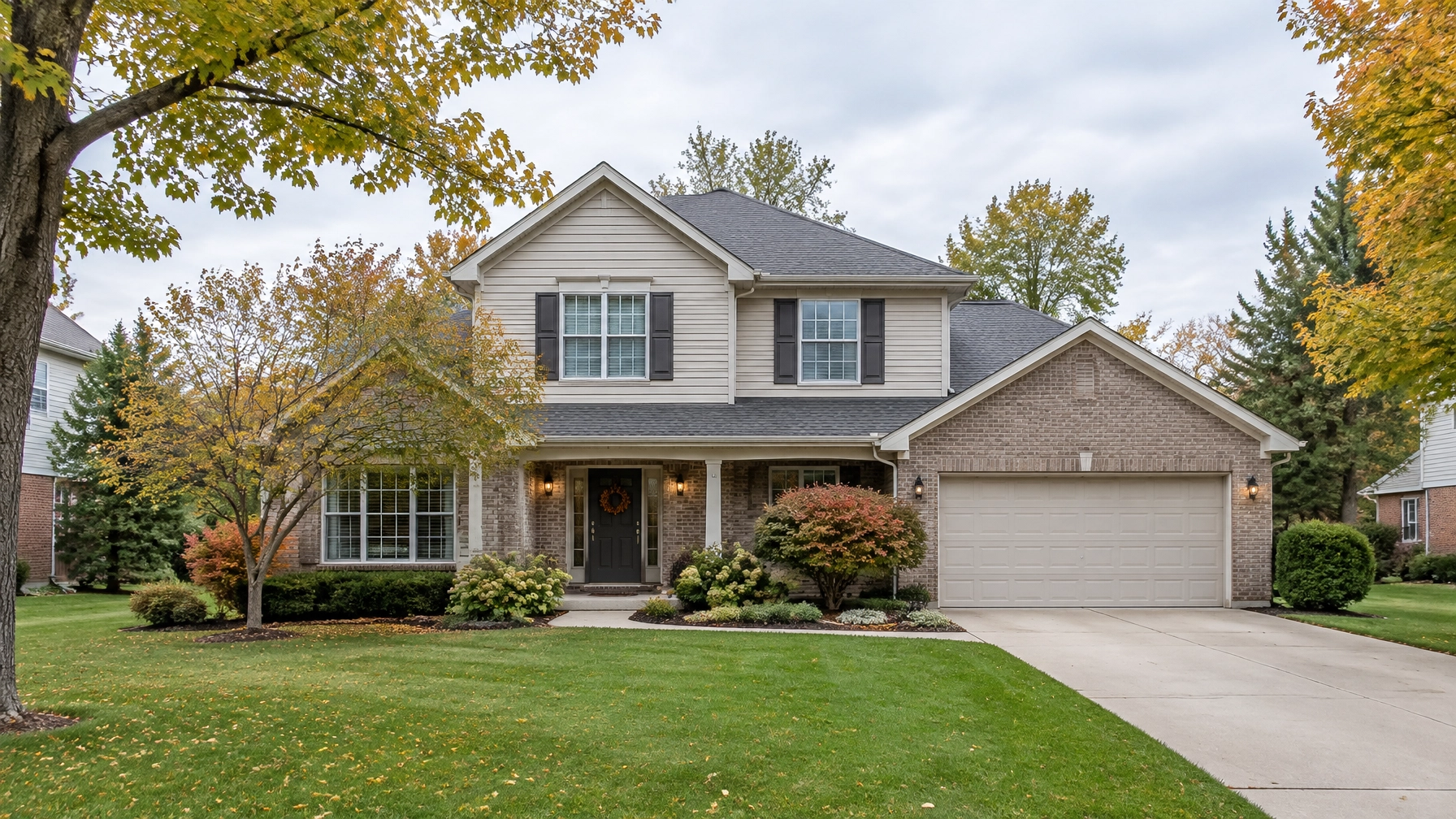
If you’re thinking about selling a house in Michigan, setting the right price is one of the most important decisions you’ll make. In a shifting market, buyers may have more homes to compare, listings can take longer to attract the right offer, and some sellers are adjusting their prices after launch.
That doesn’t mean buyers have disappeared. It means they’re paying close attention to value. A thoughtful, evidence-based price can help your home stand out from the competition and bring serious buyers through the door.
Whether you’re selling in Livonia, Plymouth, Canton, Northville, Novi, Troy, Warren, or West Bloomfield, the best pricing strategy starts with your home and its immediate market, not a broad guess about Metro Detroit. Here’s how to approach it step by step.
Start with a local market review, not an online estimate
Online valuation tools can be a useful starting point, but they can’t fully account for your home’s condition, layout, updates, lot, or specific location. Two homes with similar square footage may attract very different offers if one has a renovated kitchen and the other needs work, or if one sits on a quiet street and the other faces a busy road.
Ask for a comparative market analysis (CMA) that looks closely at homes buyers are likely to compare with yours. A useful review should include:
- Recently sold homes: These show what buyers actually paid, not just what sellers hoped to receive.
- Pending sales: These offer a timely clue about which homes have attracted an offer, even though final sale details may not yet be public.
- Active listings: These are your current competition. Buyers can choose them instead of yours.
- Expired or withdrawn listings: These may help reveal where pricing or presentation failed to connect with buyers.
Look for homes that match your property in neighborhood or market area, style, age, size, lot, bedroom and bathroom count, basement, garage, and overall condition. A nearby sale may still be a poor comparison if it’s a different property type or has substantially different features.
Price per square foot can be a helpful cross-check, but it isn’t a pricing formula. It won’t explain every difference in condition, layout, or location.

Compare your home with what buyers can choose today
Sold homes provide important evidence, but they describe past transactions. Your price also needs to make sense beside the homes buyers can see right now.
Imagine a buyer comparing your updated home with a similar active listing nearby. If the competing home is priced lower, offers a more appealing layout, or includes features yours doesn’t, you’ll need a clear reason for a buyer to choose yours. Conversely, if your home is in better condition or offers a desirable feature that comparable listings lack, that can support a stronger position.
Ask your agent to walk you through the comparisons, not just hand over a list of addresses. What makes each home similar? Where does it differ? How do those differences affect what buyers may be willing to pay?
The Realcomp regional market update reported rising inventory and longer marketing times in its August 2025 comparisons. Conditions change over time and differ by community, but the takeaway for sellers is practical: keep an eye on current competition and don’t assume yesterday’s pace or pricing will automatically apply today.
Make your first list price your strongest one
It’s tempting to list high and leave room to negotiate. But buyers often make their first impression quickly. If the price looks out of step with the home and its competition, they may skip the showing rather than make an offer.
Your first list price is also when your home is new to the market and most likely to catch the attention of buyers actively searching. Starting above a supportable range can mean fewer showings, more time on market, and later price reductions. A reduction may help, but it can’t recreate the moment when your listing was brand new.
Instead, agree on a launch price that:
- Fits the evidence from recent sales.
- Makes sense beside active and pending competition.
- Reflects your home’s condition and features.
- Appears in a relevant buyer search range.
- Gives you a clear, realistic plan for evaluating the response.
A well-supported price doesn’t guarantee a particular offer or timeline. It does give buyers a reason to take your home seriously from the start.
Price the home you’re selling, not the improvements you imagine
It’s natural to remember what you paid for a renovation or to hope a buyer will see the same potential you do. But buyers compare the home’s current condition with other available options. Improvement costs don’t necessarily translate dollar-for-dollar into a higher sale price.
If your home needs updates, compare it with homes in similar condition. Buyers may account for the expense, time, and uncertainty of making repairs. If your home is move-in ready, compare it with other well-presented homes, not with listings that need substantial work.
Be candid about features that may affect buyer interest, such as an older roof or heating system, a dated kitchen, limited parking, or a location near a busy road. A trusted agent can help you weigh those considerations fairly and distinguish meaningful value from assumptions.

Watch the market’s response, and know when to adjust
Once your home is listed, buyer behavior can help you judge whether the price and presentation are working. Make a plan with your agent to review the response early, rather than waiting indefinitely for a change.
Pay attention to:
- Showing activity: Are buyers booking visits, or are they passing by the listing?
- Feedback: Do comments repeatedly mention price, condition, layout, or another concern?
- Online engagement: Are buyers viewing and saving the listing, but not scheduling a showing?
- New competition: Have similar homes entered the market at more compelling prices?
- New sales and pending listings: Has recent activity changed the comparison set?
Few showings may point to the price, photos, showing access, or online presentation. Strong showing activity without offers may suggest buyers see an issue once they visit: perhaps the condition, layout, or value compared with alternatives. One comment is only one perspective; repeated feedback is more useful.
A price adjustment may be worth discussing when the evidence shows a consistent mismatch between your home and the market. If you decide to adjust, make a meaningful change based on the gap, not a series of small cuts that leave buyers unsure whether the value has really changed. Revisit the photos, presentation, and showing availability at the same time.
Get attentive, local guidance for your pricing decision
Pricing a home well takes more than a neighborhood-wide average. It calls for current comparable sales, an understanding of local buyer expectations, and a close look at how your property stacks up against its competition.
Jenn Tuck is a broker with JTRE Group serving Southeast Michigan. Her approach centers on comprehensive local market knowledge, personalized attention, and responsive, attentive service. She’ll listen to your goals, review the evidence with you, and explain how the options may affect your selling strategy. You can ask questions, weigh the trade-offs, and make decisions at your own pace.
To prepare for a pricing conversation, gather any details you have about improvements, repairs, and features you’d like buyers to notice. Then ask your broker to explain the comparable homes, the recommended launch price, and what you’ll review after the listing goes live.

Take the next step with a clear pricing plan
The right price is not simply the highest number you can put on a listing. It’s a well-supported starting point that reflects your home, current competition, and the buyers most likely to consider it. As the market shifts, stay curious about what the evidence is telling you, and be ready to respond thoughtfully.
For a personalized review of your home and local competition, visit JTRE Group or reach out to Jenn Tuck. Whether you’re preparing to sell in Livonia, Plymouth, Canton, Northville, Novi, Troy, Warren, West Bloomfield, or another Southeast Michigan community, Jenn would be glad to talk through your goals and help you plan your next step, without pressure and at your own pace.